
2025. 9. 13. 23:22ㆍNature
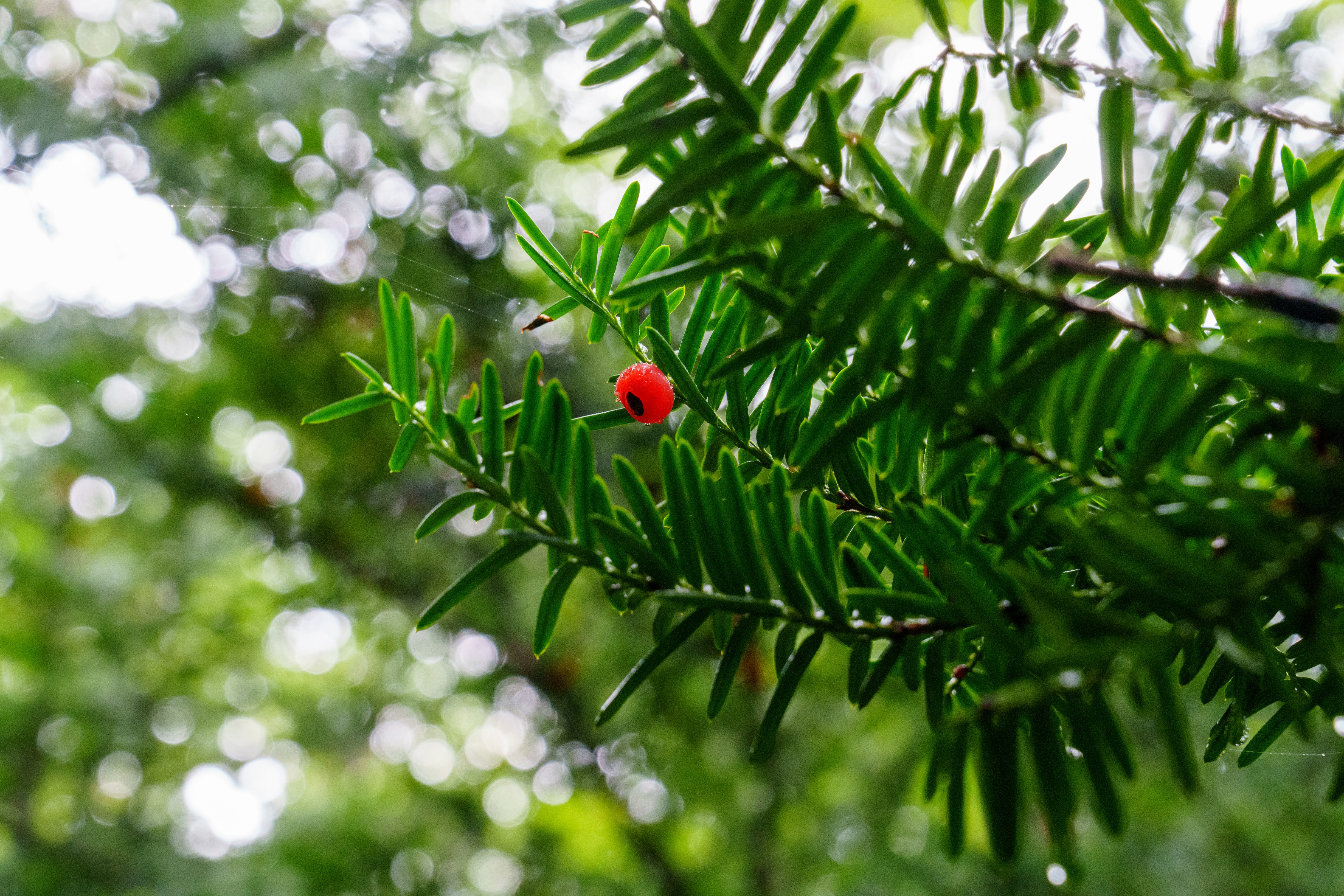
숲길을 걷다 보면 초록 잎 사이로 유난히 붉게 빛나는 작은 구슬 같은 것이 눈에 띕니다. 얼핏 보면 열매처럼 보이지만, 사실은 주목의 가종피(aril) 입니다.
가종피는 씨앗을 감싸고 있는 붉은 껍질 같은 구조로, 젤리처럼 투명하고 달콤한 맛을 냅니다. 이 달콤함은 새들을 불러 씨앗을 멀리 퍼뜨리게 합니다.
하지만 여기서 중요한 사실은, 가종피 자체가 열매가 아니라는 것입니다.
- 주목의 실제 열매는 그 안에 들어 있는 딱딱한 검은 씨앗입니다.
- 가종피는 단지 씨앗을 둘러싼 부드러운 껍질 역할을 하는 것이지, 식물학적 의미의 열매는 아닙니다.
그리고 주목은 ‘독성’을 품은 나무이기도 합니다.
- 가종피는 먹을 수 있지만, 그 속의 씨앗과 잎·줄기·껍질에는 탁신(taxine) 알칼로이드라는 맹독 성분이 들어 있습니다.
- 씨앗을 씹어 삼키면 심장에 치명적인 영향을 줄 수 있습니다.
👉 주목은 겨울에도 푸른 잎을 간직하며, 붉은 가종피가 선명히 빛나 숲을 장식합니다. 하지만 우리가 보고 아름답다고 생각하는 그 ‘열매’는 사실 열매가 아니며, 진짜 열매는 독성을 지닌 씨앗이라는 사실을 꼭 기억해야 합니다.
Walking through the forest, you may notice bright red beads glowing among the evergreen needles. At first glance, they look like berries, but they are actually the arils of the yew tree.
An aril is a fleshy, jelly-like covering that surrounds the seed. Sweet and attractive, it lures birds to eat it and disperse the seeds.
But here’s the important truth: the red aril is not the actual fruit.
- The real fruit of the yew is the hard black seed inside the aril.
- The aril is only a fleshy covering, not a botanical fruit in itself.
The yew also carries a serious warning.
- While the red aril is edible, the seed, leaves, bark, and twigs are highly toxic, containing taxine alkaloids that can cause fatal heart failure.
- Chewing or swallowing the seed can be lethal.
👉 The Japanese/Korean yew remains a striking tree—evergreen needles paired with bright red arils light up the forest. Yet what looks like a fruit is not truly a fruit, and the real fruit inside carries poison. A tree that is both beautiful and dangerous.
'Nature' 카테고리의 다른 글
| 백당나무 (Viburnum sargentii) (0) | 2025.09.23 |
|---|---|
| 눈빛승마 (Actaea asiatica var. simplicifolia) (0) | 2025.09.19 |
| 까실쑥부쟁이(Aster scaber var. incisus) (0) | 2025.09.13 |
| 산비장이 (Centaurea jacea var. angustifolia) (1) | 2025.09.12 |
| 물봉선 (Impatiens textori) (0) | 2025.09.11 |